Over the past few years, Malaysians have gotten increasingly used to premium versions of beef like Wagyu.But lamb hasn’t traditionally been part of this conversation. On restaurant menus, it has a presence but is often an ancillary character – a build-up to the lead star i.e. beef.
But with the introduction of Australian Gundagai lamb on the domestic front, things are about to change.
Launched in Malaysia recently, Gundagai lamb’s claim to fame is that it is the world’s only meat processing facility that grades lambs based on quality.
It’s a global-first technology that recognises the importance of creating a scorecard for lamb, similar to how Australian beef has its own grading system, which is the key reason it has become exponentially successful internationally.
“So typically in the past, we've never really had the technology to be able to grade lambs for quality like we do with beef, especially marbling. But we've worked very closely with a company called MEQ and they've developed technology that is able to measure the amount of marbling in lambs. So all the lambs that come through Gundagai Lamb are measured for marbling.
“And we're able to calculate the percentage of marbling in every single lamb, which is just a next level of data that we've never been able to have before. And we've certainly never been able to segregate lambs based on quality,” says Molly Greentree, the account manager of Gundagai Lamb.
The lamb comes from the eponymous historic town of Gundagai in the Riverina region of New South Wales in Australia. The town has only 2,000 inhabitants yet also hosts a thriving sheep population. Gundagai Lamb sources the lamb from over 200 farmers in the area that have been incentivised to produce the best-quality lamb.
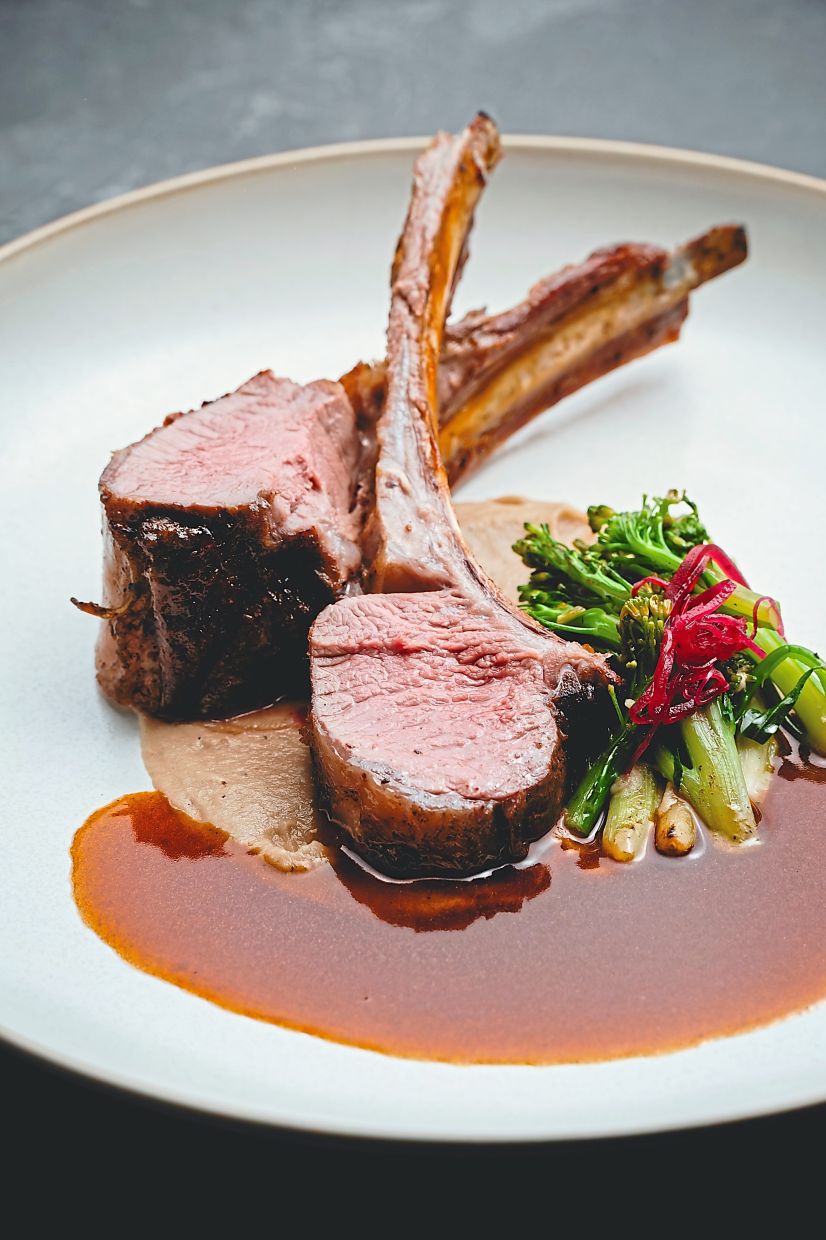
“So the way marbling works – marbling is fat so the same as any other animal like cows, when they are putting on fat, they can put on external fat and they can put on marbling. So a few things you need to marble lamb – you need good genetics first and foremost – that is to have the potential to marble, then you need to match that with energy, so you need to be in a feed surplus.
“And then you also need good management, so the sheep need to be happy, they need to be healthy and they can’t be stressed and that’s when they lay down marbling – when the sheep are alive.
“And then once we process them, we’re able to calculate the amount of marbling in that lamb, because marbling is arguably the most important trait for a really high eating quality experience,” says Greentree.
For reference, the Gundagai Lamb Quality (GLQ) score measures the lean meat yield, intramuscular fat and animal health, with GLQ5+ being the top-tier of this scale. A GLQ5+ carcass has a higher lean meat yield with no excess fat and no waste as well as higher marbling.
Gundagai Lamb already has a presence in countries like Hong Kong, Thailand, Singapore, Macau, Japan as well as Dubai and Saudi Arabia. In Malaysia, the brand will be geared towards mid-range and high-end restaurants throughout the country.
“The Malaysian market understands lamb, so we think this lamb has a really strong place in the country,” says Greentree.
So will all lamb be graded moving forward, paving the way for more premium categories of this animal? Greentree certainly believes so.
“I think in 10 years, maybe less – grading lamb based on marbling will be normal. This will be the way that all lamb is graded. It’s just that we’re going to be the first ones to really be able to do it,” says Greentree.