Carter Crouch has been fascinated by the whooping crane’s conservation story for as long as he can remember. The white bird, named for its "whooping” call, is one of the rarest in North America and was among the first to be protected by the Endangered Species Act.
It’s a story that began decades ago when they were on the brink of extinction. Today, more than 550 whooping cranes migrate from Canada to Texas in the winter. It's the last self-sustaining wild flock in the world.
A new sanctuary aims to further protect them. The International Crane Foundation, The Conservation Fund and the Coastal Bend Bays & Estuaries Program announced recently the acquisition of more than 1,336ha of vital winter habitat for the whooping crane.
Only 16 of the birds existed in Texas in the early 1940s, but thanks to decades of conservation work, they’ve rebounded. Still, more work remains as the birds face threats from urban development, climate change, infrastructure for planet-warming oil, gas and coal and more.
Crouch, director of Gulf Coast programmes for the International Crane Foundation, said the crane’s story is complicated with many successes and some setbacks, but all in all, conservationists have come a long way. "We have a long way to go still, so there’s a lot of story to be written, and I’m super excited to be a small part of that.”
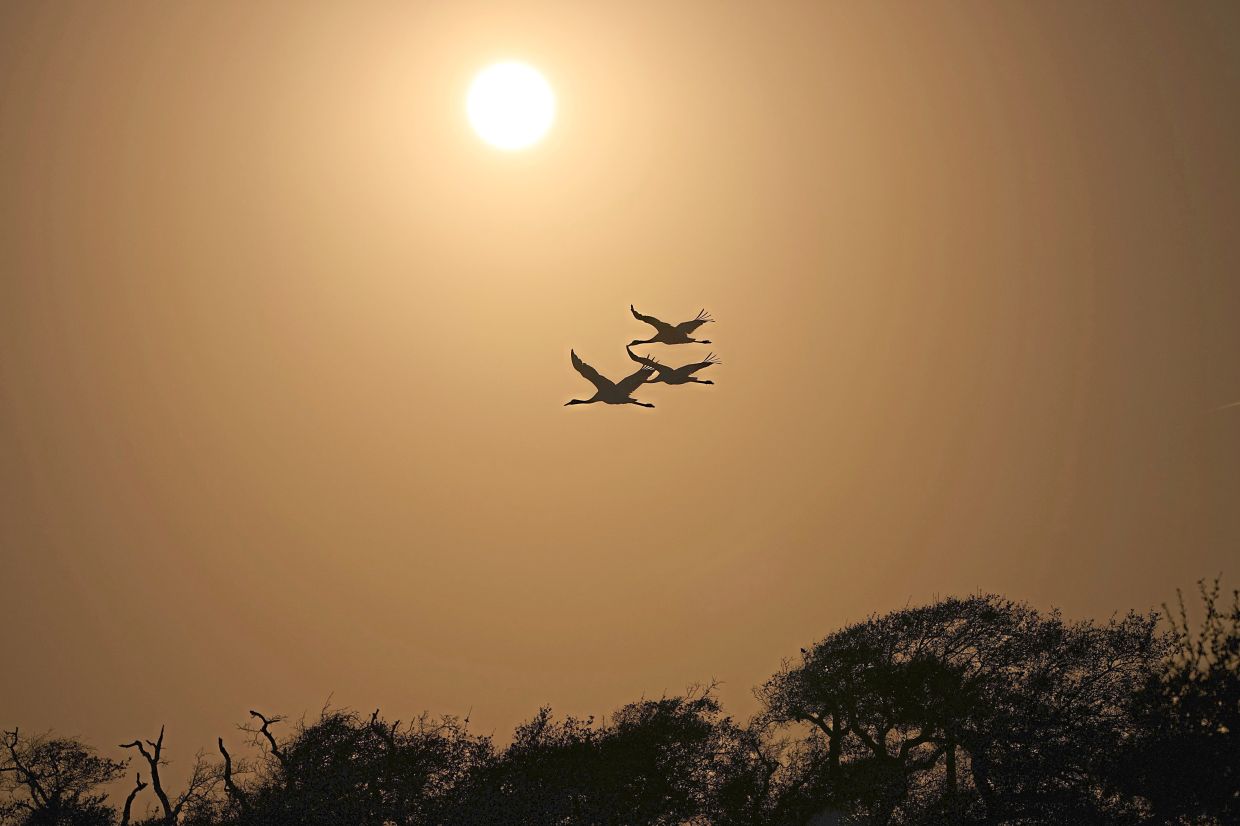
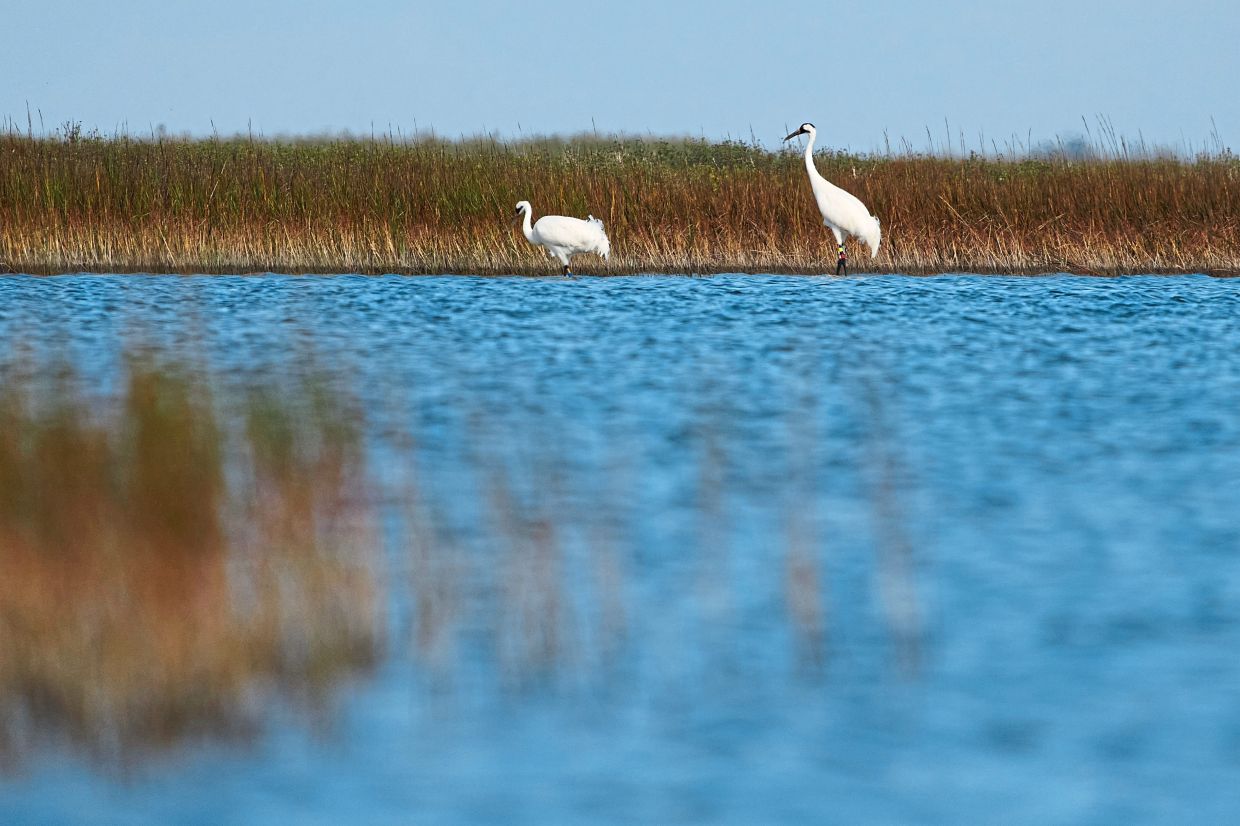
Standing at about 1.5m tall, the whooping crane is the tallest bird in North America with wingspans of up to 2.3m wide, so they need large landscapes to live in. They're snowy white as adults with black wing tips and a red forehead. It's one of 15 crane species in the world across Africa, Asia, Australia, Europe and North America – 10 of which are threatened with extinction.
Facing threats
The last wild and self-sustaining flock of whooping cranes breeds and nests in the wetlands in and around Canada’s Wood Buffalo National Park before beginning their 45-day 4,023km southern migration each winter to forage and roost in and near Texas’ Aransas National Wildlife Refuge.
The birds, which can live more than 20 years in the wild, mate for life and spend much of their lives raising families.
Cranes around the world face numerous challenges. Poaching and poisons threaten some species, and the wetlands and grasslandsthey need to survive are disappearing.
Since the 1970s, 35% of the world’s wetlands have been lost because of human activities, according to the United Nations. The Fish and Wildlife Serviceestimates the United States alone has lost at least 80% of its grasslands.
Climate change is worsening the threats. Sea level risecan wipe out the low-lying coastal wetlands in Texas, and loss of permafrostdue to warming is among their habitat threats in Canada. Changing rain patterns mean there's less wetland availability in the Great Plains and other regions.
"Generally it’s just a really long-lived group of birds, so they’re pretty sensitive to some of these threats that we’re throwing at them,” Crouch said.
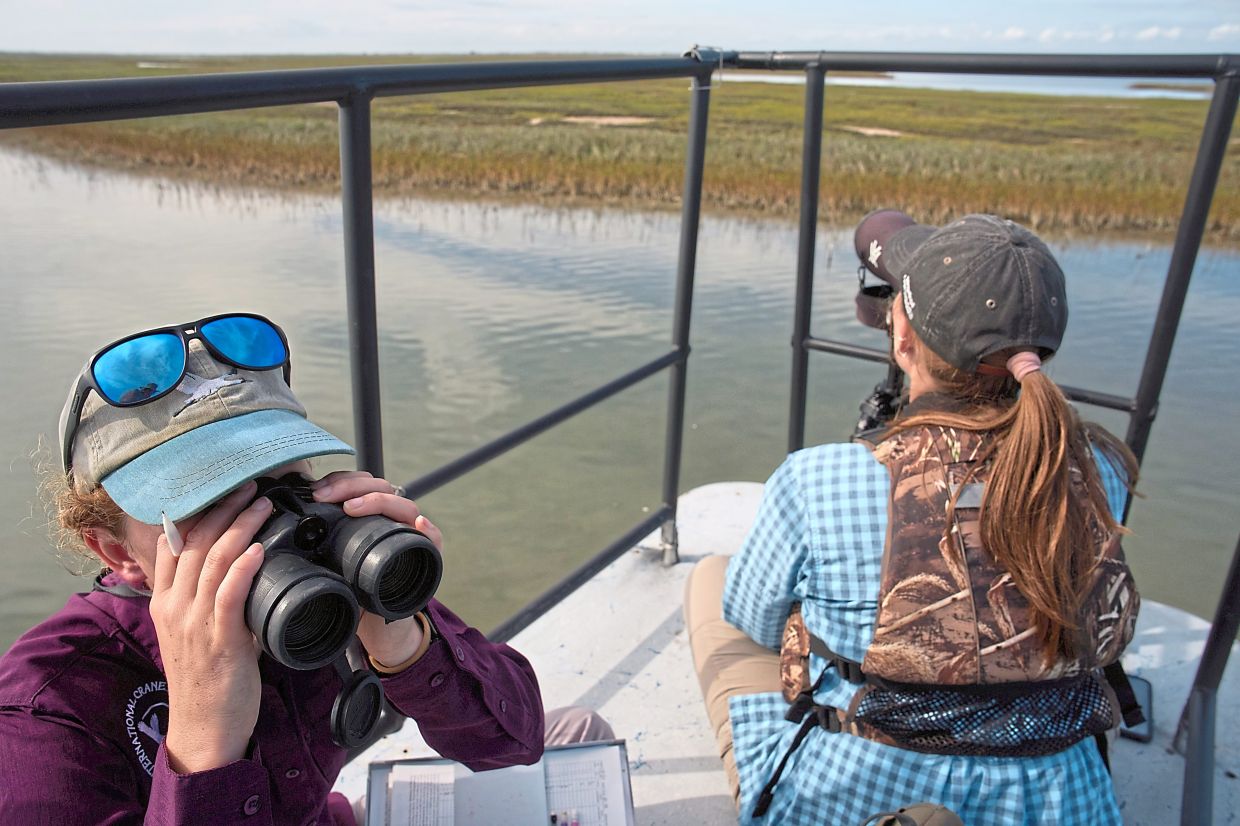
On a recent morning, after a thick fog cleared, Crouch and a team of scientists roared a boat aptly called Crane Seeker down a channel along the Gulf of Mexico to look for whooping cranes.
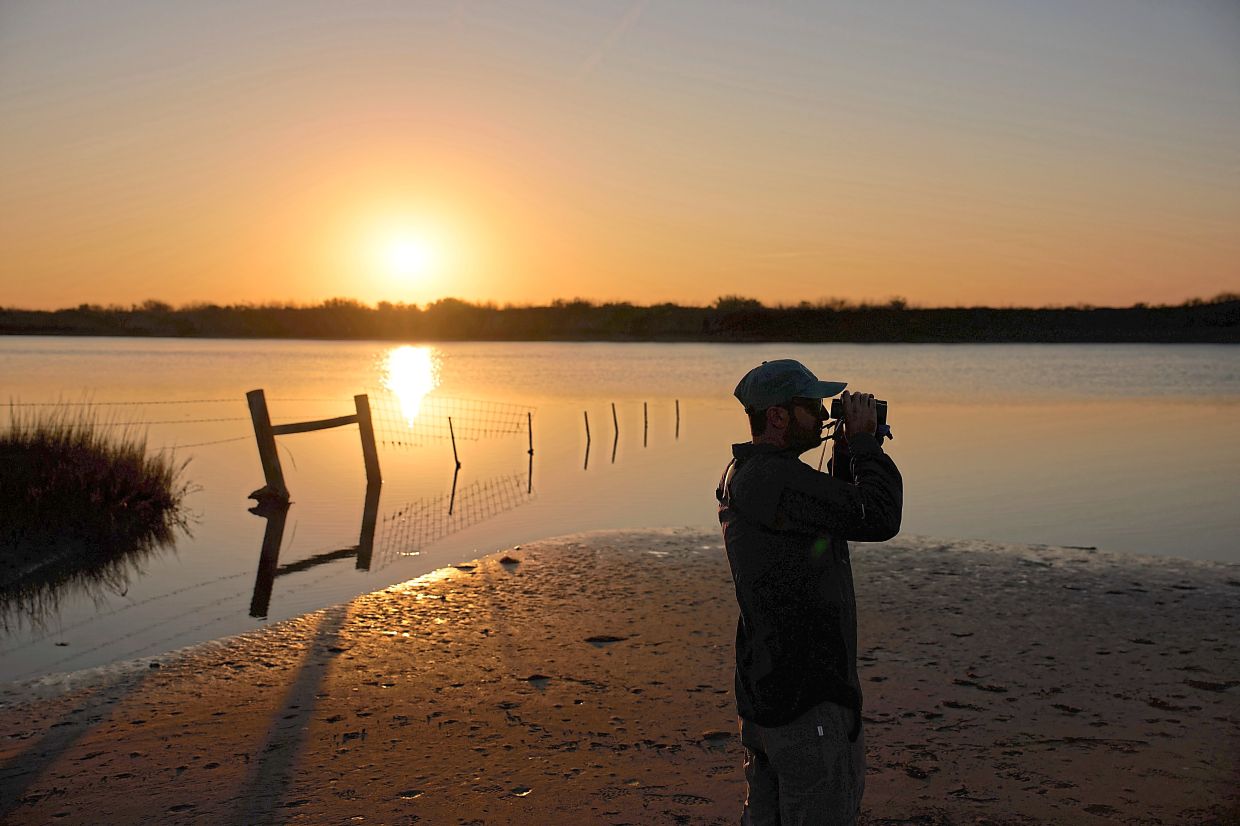
They anchored the boat, pointed their spotting scope, and patiently observed the birds for nearly an hour, diligently jotting down every minute what they were doing. Flying. Wading in shallow water. Eating crabs or wolfberries.
The federally endangered aplomado falcon and the threatened black rail bird also call this region home.
The new sanctuary southwest of Houston is made up of two properties purchased for just over $8.4mil (RM34.29mil) thanks to grants, fundraising and hundreds of donations. One property, named the Wolfberry Whooping Crane Sanctuary, will be owned and managed by the International Crane Foundation, and the other by The Conservation Fund until the Coastal Bend Bays & Estuaries Program buys it off and ultimately owns it.
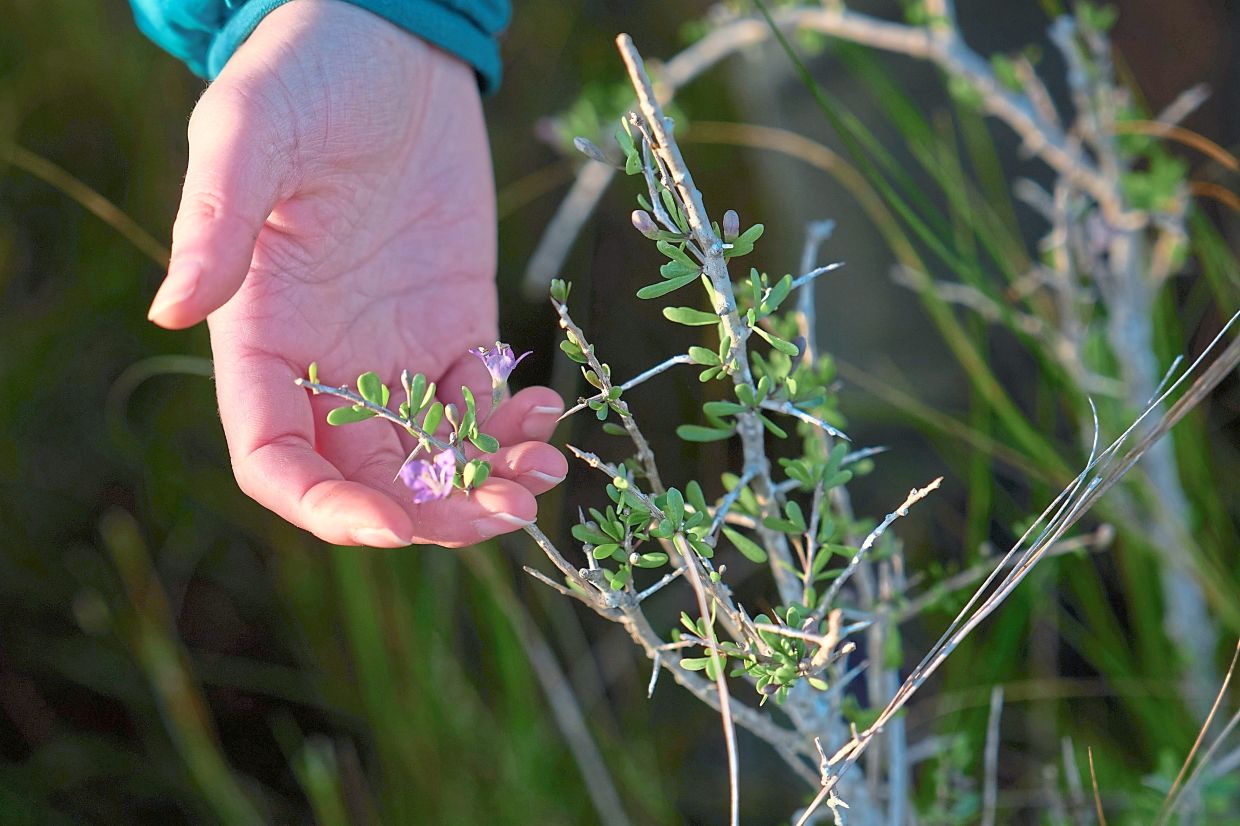
The name is inspired by the Carolina wolfberry, a shrub that produces a small, red berry whooping cranes love to eat. It's found here in the coastal habitats of Texas, along with the blue crabs, mollusks and fish they also eat.
Resilient birds
Conservationists have a lot of work to do on the sanctuary. Much of the prairie has been overtaken by shrubs, so they'll be using prescribed burns and other means to restore the grassland.
With the public's help, they'll also plant smooth cordgrass to improve the marshes and protect shorelines from erosion, which will also serve as storm buffers for nearby residents. And once the sanctuary is up and running, they hope to add guided tours and other educational events.
These protected lands near Texas’ Aransas National Wildlife Refuge are the only place in the US where people can reliably see whooping cranes, said Julie Shackelford, Texas director for The Conservation Fund. It's a destination for birders worldwide, with visitors boosting the economies of nearby communities like Rockport and Port Aransas.
In the winters, a "couple hundred people every day go out just to see the whooping crane” with their young, said Shackelford, a fellow bird enthusiast. She described helping to protect the land for future generations as "super gratifying.”
Mike Forsberg knows these birds intimately. As a conservation photographer, he's spent countless hours over the years taking photos of North America's cranes, even publishing books about them. He has a podcast about whooping cranes, too, and just finished shooting a documentary. He calls himself a proud member of the growing "craniac community.”
"The heart of keeping anything on the Earth... has to do with making it personal to you, and cranes are just a great doorway in,” said Forsberg, a faculty member at the University of Nebraska.
His 2024 book, Into Whooperland: A Photographer’s Journey With Whooping Cranes posed the question of whether these birds can survive a 21st century world.
"Of course they can,” he said. "They’re resilient. But it’s up to us. And these habitats that are being protected now by the (International) Crane Foundation and by folks who just manage their land with a certain ethos... that’s critical.” – AP