A production at the Children's Theatre Company (CTC) seems like the definition of a sensory overload. The theater produces big, loud and colourful shows full of over-the-top characters like the Grinch and the denizens of Oz.
Its mission statement promises "extraordinary theater experiences that educate, challenge and inspire young people and their communities."
And yet, for a decade now, the CTC leadership has worked with mental health non-profit organisation Fraser in Twin Cities, Minnesota, the United States to create special, sensory-friendly performances for kids on the autism spectrum and other neurodivergent people.
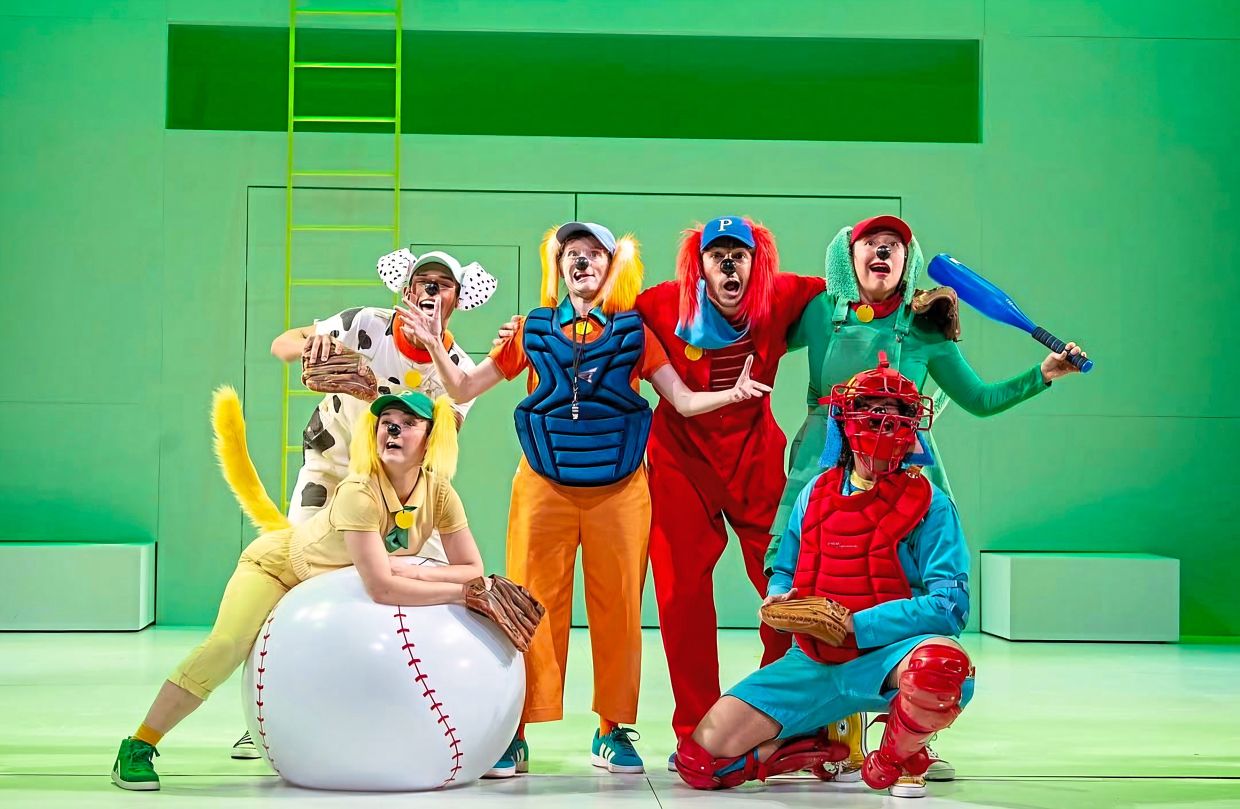
For each production, the theater typically offers a pair of performances, a Friday evening show and Sunday matinee, designated as sensory-friendly. Two took place recently for Go, Dog. Go! and the company is currently staging them again for Dinosaur World Live and in April, for The Wizard of Oz.
"It’s definitely a delicate balance," said Gina Brady, Fraser's sensory supports and training programme manager. "We don't want it to feel like a watered-down performance or completely change the story or things like that. We still want people to have the authentic experience that they're trying to get."

So how to they do it?
It's about establishing a more relaxed attitude in the audience, Brady said. That means allowing audience members to move around and make more noise than is typically acceptable in a theater setting.
House lights usually stay up, some volumes are reduced and strobe lights and the like are skipped. A quiet room is available for the overstimulated in need of cooling down. CTC even offers theatergoers the opportunity to "meet your seat" prior to the production in order to reduce stress for those in unfamiliar territory.
The idea isn't to change the audience members, but to make the experience more comfortable and relatable.
"It kind of puts the responsibility on the business to make the modifications, to make it as inclusive and accessible to many members of the community, rather than expecting that each member of the community fit themselves perfectly into this mold that society has told them that they have to fit into," Brady said.
Growing popularity
The concept of sensory-friendly performances began to take shape in Twin Cities arts organisations in the mid 2010s, said Brady, whose first experience with one was The Lion King at the Orpheum Theatre in Minneapolis, Minnesota in 2016.
Today, such performances and other resources like sound-dampening headphones and sensory-friendly hours are common in organisations across the metro, including Minnesota Children's Museum, Science Museum of Minnesota, Ordway Center for the Performing Arts, Guthrie Theater, Walker Art Center and Minnesota Orchestra.
While people on the autism spectrum make up a large part of these audiences, Brady uses the umbrella term neurodivergent to describe those who attend.
"We talk about it as people experiencing sensory differences, because it includes the autism spectrum and most of the neurodiversity umbrella.
But it also includes people who have had past traumatic experiences, maybe people who have migraines or neurologic surgical conditions.
"Sometimes it's just people who benefit from a more relaxed theater atmosphere, or people who don’t feel like they can comfortably go to a standard theater performance.
"When preparing a sensory-friendly performance, Brady meets with staff at a theater to tour the space and get an idea of the challenges they face. For CTC's Go, Dog. Go!, she went to a standard performance to get a feel for the show and then made recommendations for modifications.
"For example, there's a character who is blowing their whistle through the performance," Brady said. "So I recommended that either that's completely eliminated or maybe changed to something like a kazoo that's not quite that same high frequency. They had some strobe lighting, so (they) modified that. The CTC is wonderful, they've been doing this for 10 seasons and they are very open to feedback."
Parents love it
The sensory-friendly performances are a hit with parents, said Michael Winn, CTC's associate artistic director and director of equity and community partnerships.
"Oh, they love it. They love it," Winn said. "Parents are very concerned about their children, but they're also concerned about the actions of their children and how they come across to the general population. Their child can be their full self in this particular environment and not worry about how anybody else in the audience is reacting. It gives their child a place to be themselves."
Katie Najjar knows that power firsthand. She has three children, and her youngest is a seven-year-old who was diagnosed with autism spectrum disorder in 2021.
"There are a couple of challenges," Najjar said. "He's still pretty young. Sometimes we don't know if he'll like something, and he may react to not liking it in a way that’s not typical. He might yell or scream or want to run around. He also might enjoy it, but the way he moves his body or vocalises might not be what most people would expect during a theater performance."
After her son was diagnosed, Najjar didn't know much about the available resources and began to learn about all things autism.
She started volunteering as a classroom parent at Fraser School in Richfield, Minnesota where her son attends. Her background is in events and so she also began helping out with fundraising.
When a marketing and development position at the non-profit opened up in 2024, she took the leap and took the full-time job. All the while, her son was a Fraser client.
Najjar began taking her son to various Fraser events. Now a first grader, her son recently went on a field trip to Stages Theatre Company in Hopkins, Minnesota.
"They have a wonderful sensory programme. And we discovered he loves live theater; he got a great kick out of it. And it was something we had never done before. He loved it so much, we're planning on doing some more events at the CTC.
"As a parent, you know that you're among a group of people who are in the same boat and are accepting when everybody's making different movements or vocalising differently. It's just a more relaxed and supportive environment, which is great."
Experiencing the arts in general is beneficial for everyone, Brady said. And sensory-friendly performances allow people to get those benefits as a whole family. One of the biggest recurring pieces of feedback she hears from parents is that it serves as a great entry point.
"People tell us they got more familiar with the building, with the environment, with the flow of how things work. It gave them the confidence to come back during a standard performance. That’s not going to be the case for everyone. Some people are really going to need the additional support and relaxed environment. But for those who had some anxiety around going the first time, they know they have more opportunities to go back to the standard performance." – Pioneer Press/Tribune News Service