Fashion has placed a strong emphasis on cut, shape and silhouette for decades – but that is no longer the whole story.
Increasingly, what a garment is made of is becoming just as important to the design.
The industry is witnessing a shift in narrative, with brands placing greater emphasis on fabrics and other innovative materials.
Materials are becoming part of what gives a collection its identity, influencing not only how a garment looks and feels, but also how it is made and experienced by the consumer.
A story by The New York Times in July explored whether couture collections are moving beyond spectacle and towards a deeper conversation about materials themselves.
Indeed, designers such as Schiaparelli’s Daniel Roseberry are moving beyond the traditional silks and satins of couture, embracing materials such as latex and silicone.
At Dior, Jonathan Anderson transformed two-dimensional materials through knotting, pleating and moulding.
He also highlighted 18th-century Indian chintz, making the fabric an integral part of the couture collection’s story.
The same emphasis can be seen in the latest ready-to-wear collections from numerous brands.
Sandro’s Autumn/Winter 2026 collection, for instance, looks to the 1970s, but brings the decade into focus through its fabrics.
The press notes draw attention to the “fluidity of satin” and the “delicacy of lace”, while noting how “Prince of Wales checks and cable-knit sweaters converse with Paisley-patterned pieces”.
Here, it is the materials that anchor the collection to the specific decade.
Maje’s collection for the same season similarly highlights the importance of materials. The brand describes it as “tactile, luxurious materials meet modular, functional design”.
Its inspiration is simply “hotel living”, approached through careful storytelling via fabric selection.

Read more: How Malaysian fashion brands puts modesty, comfort and performance in motion
Collaborative materialism
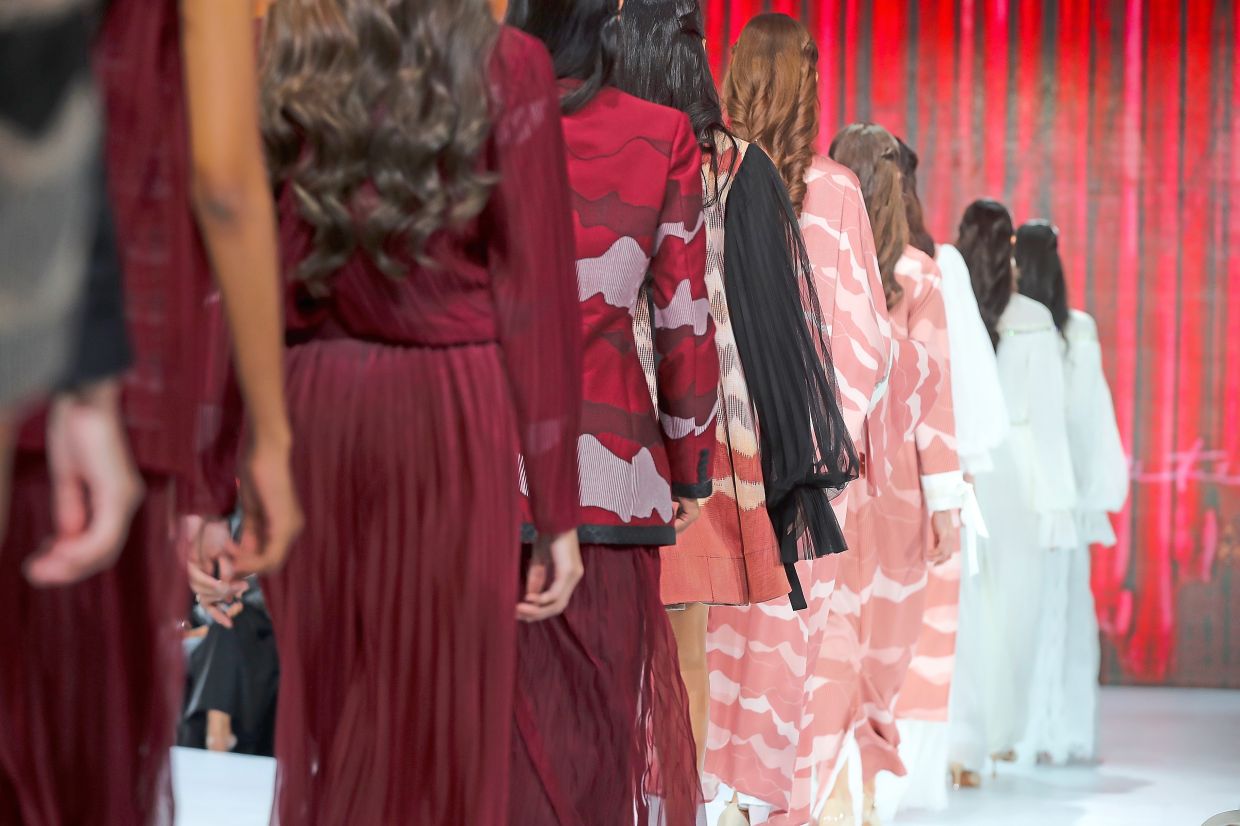
Recently, Malaysian social enterprise Tanoti collaborated with designer Fitri Nasaruddin on a runway collection featuring three distinct Sarawakian textile traditions – songket, pua kumbu ikat and batik linut.
Founder Datuk Jacqueline Fong believes the creation of a fashion garment should begin with a clear understanding between the designer, material producer and maker.
She says that, first, the designer needs to understand the material – its properties, processes, limitations and possibilities.
The material producer, meanwhile, needs to understand the designer’s vision and explore how the craft can respond to it.
Finally, the maker needs to understand how both the material and the design intent should inform the construction of the garment.
“Material can make or break a garment’s design. A designer may have a strong concept, but it is through the choice of material that qualities such as refinement, structure or craftsmanship are conveyed,” Fong adds.
She explains that while material does not necessarily need to be the starting point for a designer, its considerations need to enter the design process very early on.
However strong the design may be, she says, it is ultimately the material that determines its success and how it is valued.
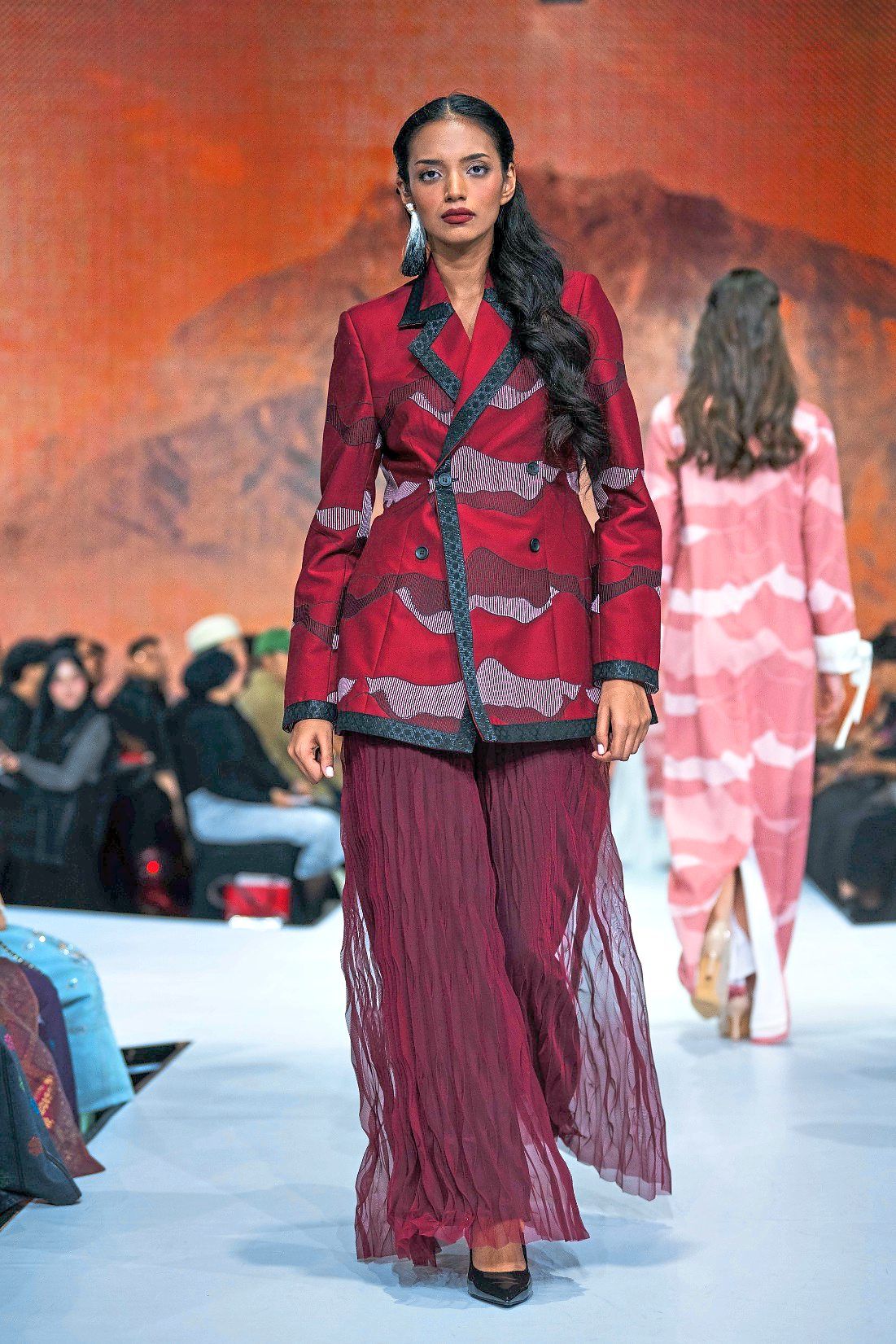
For Fitri, treating materials as more than an afterthought can fundamentally change the design process.
“Instead of sketching a silhouette first and trying to fit a fabric into it, you pay attention to the weight, texture and natural drape of the material,” he says.
“You then build a modern, wearable garment around its natural strengths rather than forcing the fabric to behave against its nature.”
This approach can also reduce costly trial and error during production, helping to ensure a collection remains commercially viable and accessible without compromising on quality.
“It allows you to figure out the textile’s technical limits early, guiding you to design around its character efficiently,” he stresses.
Increasing awareness
The shift, however, is not happening solely at the design board.
Gary Ng, co-founder of Beon Diamond, a local lab-grown diamond brand, says fashion consumers are far more informed than they were even five years ago.
“Before making a purchase, many will research materials, compare options online and understand the differences between products.”
From a jeweller’s perspective, he says customers are no longer looking only at how a piece looks.
“A beautifully crafted ring with an exceptional diamond creates an emotional connection, but consumers also want confidence that the materials meet their expectations for quality, transparency and value,” he says.
In this context, the growing conversation around materials is closely tied to sustainability.
Ng points to diamond jewellery as an example, noting that customers are asking more questions about provenance and transparency. They also want to understand how a product is made and who is behind it.
“Many customers appreciate knowing that they are working directly with local designers and jewellers,” he adds.
And strengthening local material sources also brings broader benefits to the industry.
“Building stronger local capabilities creates long-term value for the industry. It encourages innovation, develops skilled talent and reduces dependence on overseas supply chains,” Ng says.
“More importantly, it allows Malaysian brands to develop their own identity instead of simply following global trends.”
The shifting mindset is also changing the way consumers understand and accept different materials.
Ng says consumers are increasingly aware that lab-grown diamonds should not be confused with diamond simulants such as cubic zirconia or moissanite.
Ultimately, this greater awareness could broaden the range of materials and products available in the fashion industry, while giving consumers more informed choices about what they buy.
Read more: Why what we wear is changing, and fashion brands are racing to keep up
Questioning the value
Victoria Elizabeth Ho, head of the fashion design and textiles programme at Singapore’s Lasalle College Of The Arts, disagrees with the suggestion that conversations about materials are only now becoming a starting point for fashion design.
She says what the media is beginning to notice is a renewed focus on materiality, alongside a greater public understanding and visibility of the fundamental role materials have always played in the fashion design process.
According to her, materials are already central to the identity of certain brands.
For example, Chanel is immediately associated with multicoloured tweeds and boucle. You also can’t really separate the Burberry trench from cotton gabardine.
With Issey Miyake, material innovation and garment design are completely interconnected, while Uniqlo, at a very different market level, has built a recognisable identity around functional textile technologies.
Ho, who is also a designer, explains that over the last two or three decades, mass production and fast fashion have been driven by reducing prices, and fabric is one of the areas where costs can be significantly reduced.
“This has contributed to an enormous growth in cheaper, mass-produced materials and, I think, a devaluing of our relationship with material,” she says.
Both designers and customers are thus looking at where materials come from, how they are produced, how long they last and what environmental impact they have.
Ho brings up another interesting point about AI and digitalisation.
“As our lives become increasingly digital, there is a counter-movement towards things that feel physical, tactile and human. Craftsmanship, materiality and making provide that sense of authenticity and connection.”
She further says that materials are incredibly personal.
What we want against our skin changes according to climate, age, lifestyle and our bodies. Comfort, breathability, warmth, functionality and performance all matter in this context.
“So I hope we move towards understanding value not simply as, ‘What does this garment look like?’ But also, ‘What is it made from? Where did it come from? Who made it? How does it feel and function? How long will it last?’”
As a fashion educator, Ho doubles down on the thinking.
“Within the creative fashion cutting pathway, students source and understand materials to inform the development of garments, while the fashion textiles for fashion pathway actively begins with the material itself, allowing textile development to lead into fashion outcomes.”
Perhaps the renewed attention on materiality is less about fashion discovering something new than rediscovering something it has always known.
In an industry increasingly concerned with value, longevity and authenticity, the material may once again be as important as the silhouette it creates.